

People treat “natural” as equal to “green”. They pick cremation as the automatic lower-impact choice. A family learns little from either assumption. Talk of materials used stays scarce. Cemetery rules get no detail. Preparation of the body stays vague. Events after the service get none.
Green burial shares one planning conversation with cremation. Body donation shares that same conversation. The options cannot replace one another. Some people weigh donate my body to science beside burial. They place that same option beside cremation. Donation is an end-of-life choice of its own. Its purpose belongs to donation alone. It needs its own arrangements.
Where Cremation Stands Today
Most families in the United States now select cremation. The National Funeral Directors Association reports the 2025 cremation rate at 63.4%. The projected burial figure is 31.6%. Popularity leaves the environmental question open for an individual family.
Green funeral options now draw more interest. A 2025 national survey of funeral preferences measured that interest. 61.4% of consumers showed interest in green options. That share climbed from the 2021 level of 55.7%. A separate 2017 NFDA survey addressed green burial. More than 53% of respondents showed interest in green burial options.
Those figures serve only to describe interest. They set no rule for any one person. They explain requests beyond a simple burial-or-cremation answer. Cemetery practices matter to the person making the plan. Body preparation matters to that person.
What Green Burial Means
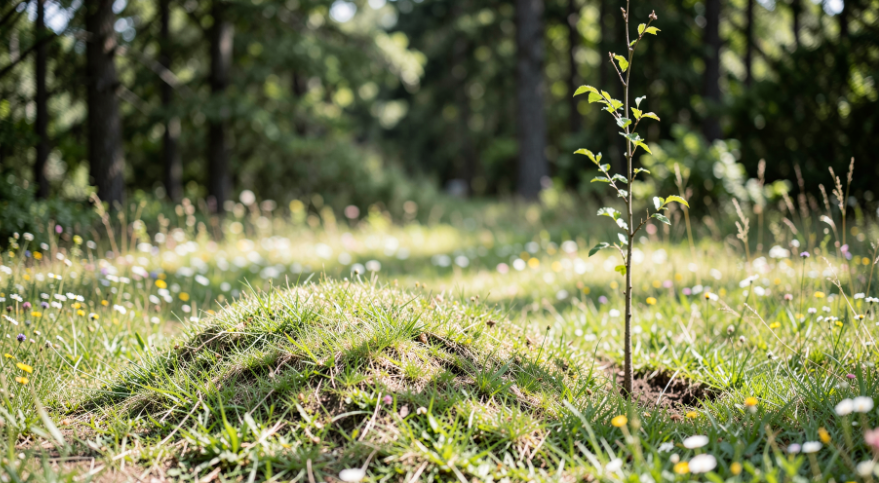
A green burial refers to a set of burial practices. Lower environmental impact is the aim. Resources are conserved. Carbon emissions are reduced. Workers receive protection from harmful chemicals. It is no decorative label for a conventional service. Habitat restoration can occur. Habitat preservation can occur. Providers can differ on those details.
Biodegradable caskets may be used. Biodegradable shrouds may be used. A grave liner may be omitted. Plants may serve as grave markers. Stones may serve as grave markers. A burial vault may be omitted. A provider may use non-toxic materials for needed body preparation. Embalming may be omitted here. Clear terms should set out arrangements. A family then chooses the cemetery.
Details matter here. A biodegradable container alone doesn’t show a permitted full green burial. The cemetery may require a vault. Embalming rules may also apply. Marker rules may also apply. Families need to ask about the whole arrangement. Families should not rely on the name of one product.
Green Burial Certification
Sales language hides the difference. A natural look is not a verified green burial. Families seek Green Burial Council certification. They review a cemetery section. They check a funeral home. They check a burial product. They confirm certification coverage.
The Green Burial Council’s certification standards cover funeral homes, cemeteries, burial products, body-care products. The council says its review looks for harmful chemicals. The review looks for misleading environmental claims. Families receive a first reference. The same rules do not cover every arrangement part.
Certification cannot replace close policy reading. A funeral home can offer green burial arrangements. Cemetery rules differ on vaults. Markers follow separate cemetery rules. Permitted containers follow cemetery rules. Written policies help stop that misunderstanding. One side is the service provider. The other side is the burial ground.
Cemetery Types
A hybrid cemetery is a traditional cemetery. It sets aside an area for green burials. This type is the most common green burial ground. Some families want a familiar cemetery setting. They have different burial requirements. A hybrid cemetery may suit them. The green section may still have its own rules for grave marking and containers.
A standalone green cemetery is devoted to green burial. It does not reserve one section in a conventional cemetery. Written rules outweigh the cemetery name. Those rules cover the burial area. Graves are prepared under the rules. Graves are marked under the rules.
Check for a vault requirement. Check the containers the cemetery accepts. Staff should state whether embalming is expected. Ask how staff mark graves. The cemetery should answer those questions directly. A funeral home handles other service parts. A plain answer counts more than a broad environmental label.
Where Body Donation Fits
Body donation comes up as another option. People may review donation before cremation or burial. It has a different purpose from a cemetery arrangement. It should not be treated as a version of green burial. It should not be assumed to follow the same planning steps.
No reliable environmental score covers every situation. Nothing ranks body donation versus cremation versus burial. A family must keep that limit in view. This stops a broad environmental claim from replacing understanding. Understanding covers the actual arrangement after donation or cremation.
The option must fit the person’s wishes. It must fit the family’s planning needs too. That decision can stand beside burial or cremation talk. That choice does not replace the conversation. Recording the person’s preference clearly helps. Relatives face no later need to interpret it.
See Also: Home Security Decoded: Choosing Multi-Point Locking Systems for Maximum Safety
Questions to Ask Providers
The clearest conversations start with what will actually happen. Avoid any request for an “eco-friendly package.” A provider should explain its materials. Cemetery rules should receive the same clear explanation. Preparation policies need a direct account. The family should not decode broad marketing language. Ask the provider to explain the written policy after an unclear answer.
- Does the cemetery or funeral home hold green burial certification?
- Is a vault or grave liner required in the intended burial area?
- Which caskets, shrouds, or burial containers are accepted?
- Is embalming required, optional, or avoided? Which materials are used?
- Is the burial area a designated green section within a traditional cemetery?
Ask for written answers when a detail affects the decision. This matters for separate funeral home and cemetery businesses. Each may control a different part of the arrangement. Keep those answers with the person’s end-of-life planning documents.
Where to Start
Start with the question that matters most to the person making the plan. Choose the burial setting, embalming, or cemetery practices. Decide if body donation belongs in the discussion. That focus makes the comparisons easier. One broad label should not do too much work. Relatives get a clear basis for comparing providers.
Then use those same questions at each funeral home or cemetery under consideration. Read the cemetery’s written rules before the final choice. Keep a copy with the person’s other end-of-life plans.


[…] See Also: Eco-Friendly End-of-Life Options Explained […]
[…] See also: Eco-Friendly End-of-Life Options Explained […]